Bilingual branding: making Chinese and English names work together
 Desmond SumFounder & Creative Director
·3 min read
> The short answer
A bilingual brand works when both names share one idea and one visual system. Decide which language leads for each audience, choose Chinese and Latin typefaces that match in weight and personality, and treat the Chinese name as a creative task (transcreation), not a literal translation. Then test both with native speakers.
Many brands in Singapore speak to customers in more than one language, and many regional brands arrive with a Chinese name that needs an English partner, or the other way round. Getting the two to feel like one brand is harder than it looks.
Which language should lead?
Start with the audience and the channel, not the founder's preference. A brand sold mainly to Mandarin-speaking customers may lead with Chinese on pack and use English as support; a brand targeting a broad Singapore audience may lead with English. Many brands switch the lead by context: Chinese first on shelf in certain retailers, English first online. What matters is that the rule is decided once and written into the guidelines.
How do I pair Chinese and English typefaces?
- Match weight and contrast. A bold geometric Latin type next to a thin serif-style (Song or Ming) Chinese type looks like two brands.
- Match personality. Rounded, friendly Latin letters pair with rounded Chinese forms; sharp, technical ones with cleaner, squarer forms.
- Balance optical size. Chinese characters look bigger than Latin letters at the same point size. Adjust by eye, not by numbers.
- Check the character set. Many display fonts support only a limited number of Chinese characters. Make sure the typeface covers everything your packaging and marketing will need.
- Watch licensing. Chinese font licences can be expensive and restrictive for commercial use. Check before you design around one.
Should I translate the name or create a new one?
Direct translation rarely works. A good Chinese name balances sound (does it echo the English name?), meaning (are the characters positive and relevant?) and tone (does it feel premium, friendly, traditional or modern?). This is transcreation: writing a new name that carries the same idea. Check the characters for unintended meanings, and how they read in Singapore and in any other market you plan to enter.
What does a bilingual brand look like in practice?
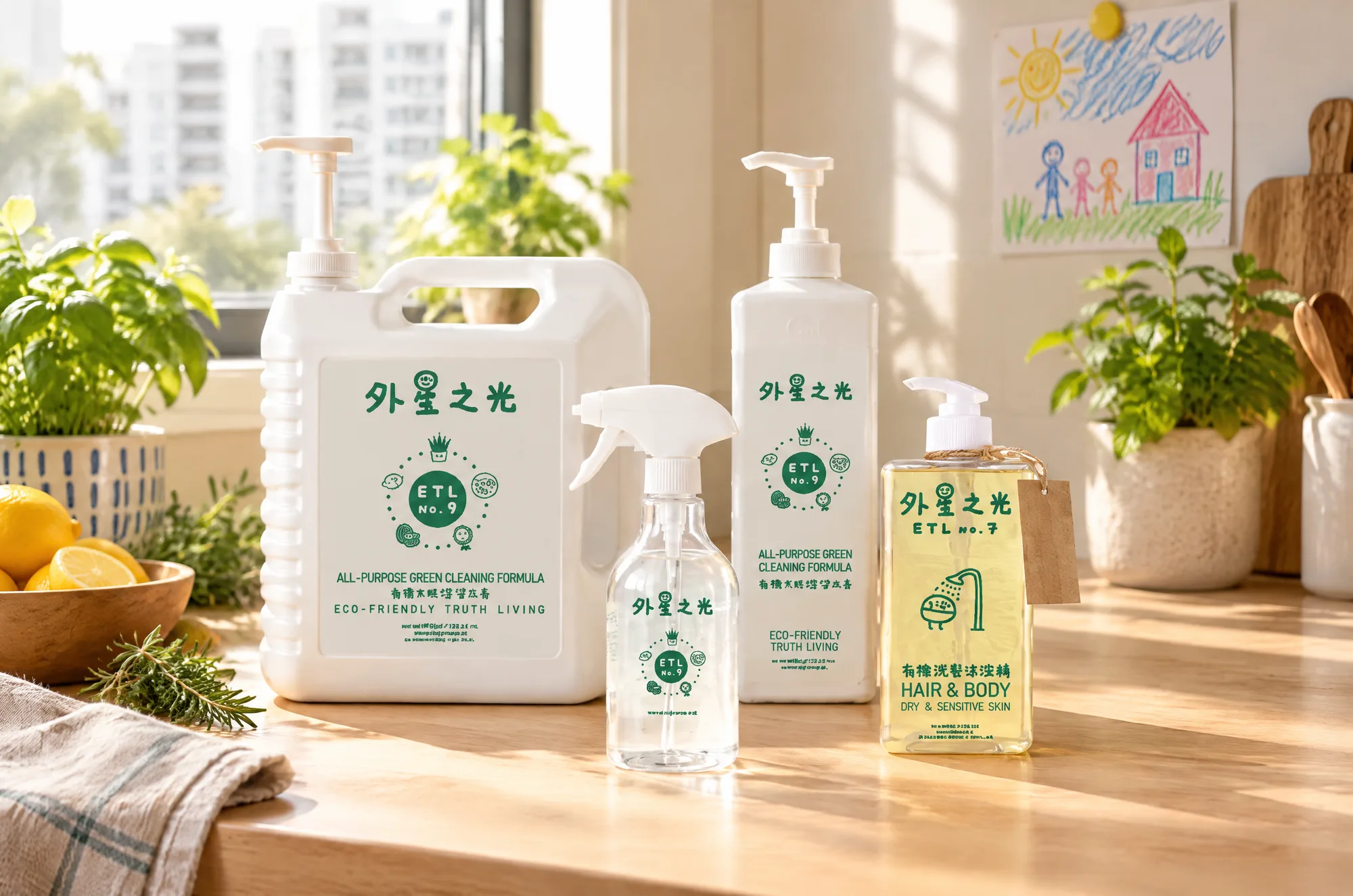
ETL carries its Chinese name, 外星之光, alongside the Latin letters, and its happy-planet mascot, illustrated by Akinori Oishi, has a body drawn from the character 生 (life). Illustration and character can bridge languages when type alone struggles. See the ETL case study.
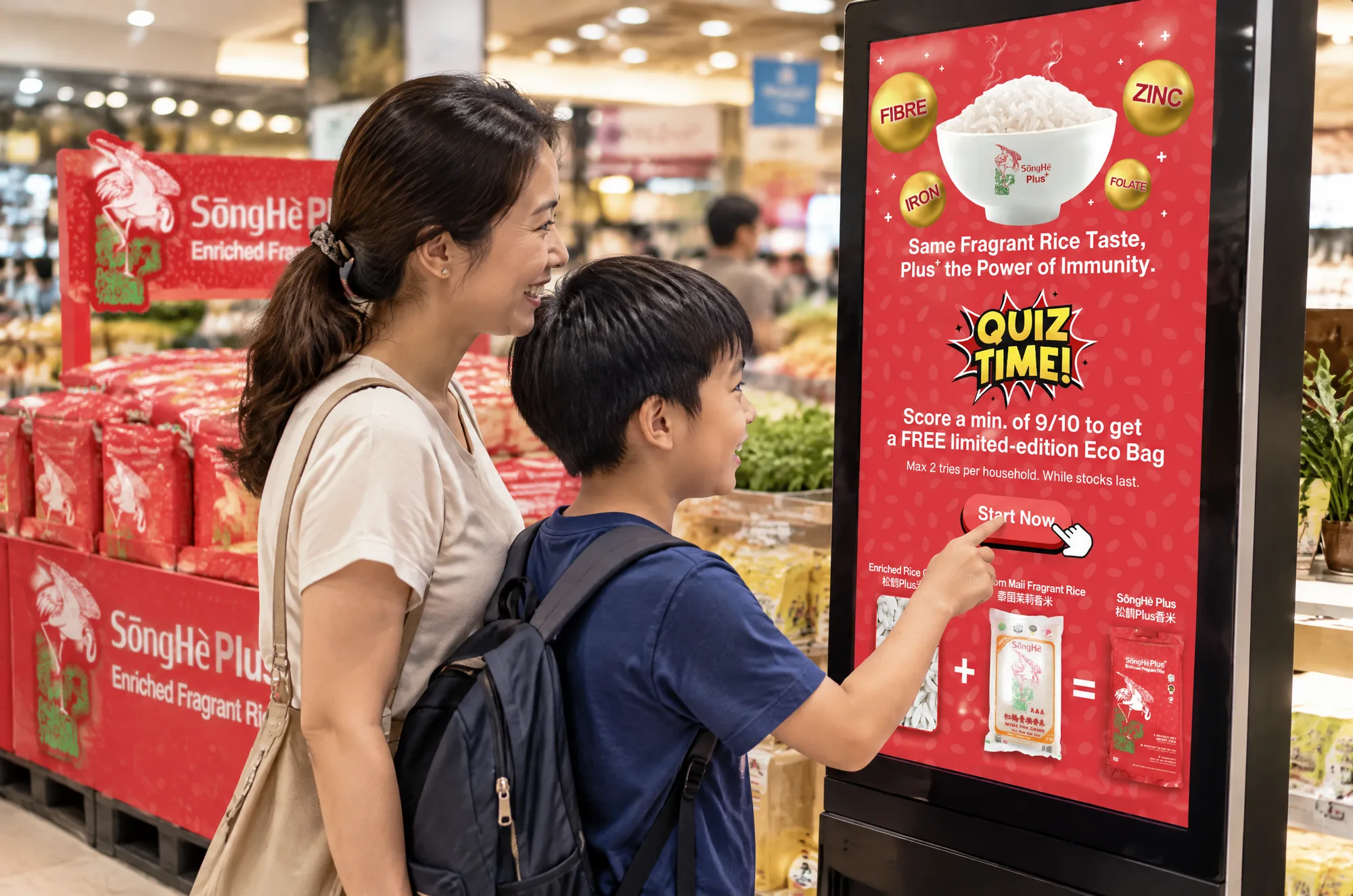
SōngHè Plus shows the other side: a brand name written in pinyin, with tone marks in some uses and without them (SongHe Plus) in others. The rule is to keep both forms visually consistent so customers recognise one brand, whichever version they meet. See the SōngHè Plus case study.
What goes into bilingual brand guidelines?
- Approved lockups: English-led, Chinese-led, and single-language versions.
- Typeface pairings with size and spacing rules.
- Which language leads in which context.
- Approved translations of the tagline and key messages, not just the name.
- Rules for pinyin, tone marks and simplified or traditional characters where relevant.
Bilingual branding with Dope Creatives
We have designed brands and packaging that work in English and Chinese, from lockups to bilingual packs. It sits within our Brand Detox and Hard Copy services.
Quick questions
Does my brand need a Chinese name in Singapore?
Not always. It helps when a large share of your customers read Chinese, or you plan to expand to Chinese-speaking markets. Many Singapore brands operate in English only.
What is transcreation?
Transcreation means recreating a name or message in another language so it carries the same idea and feeling, rather than translating it word for word.
Simplified or traditional Chinese characters?
Singapore uses simplified characters. Brands aimed at Hong Kong or Taiwan audiences usually need traditional characters, sometimes as a separate lockup.